TCI
指令示意图
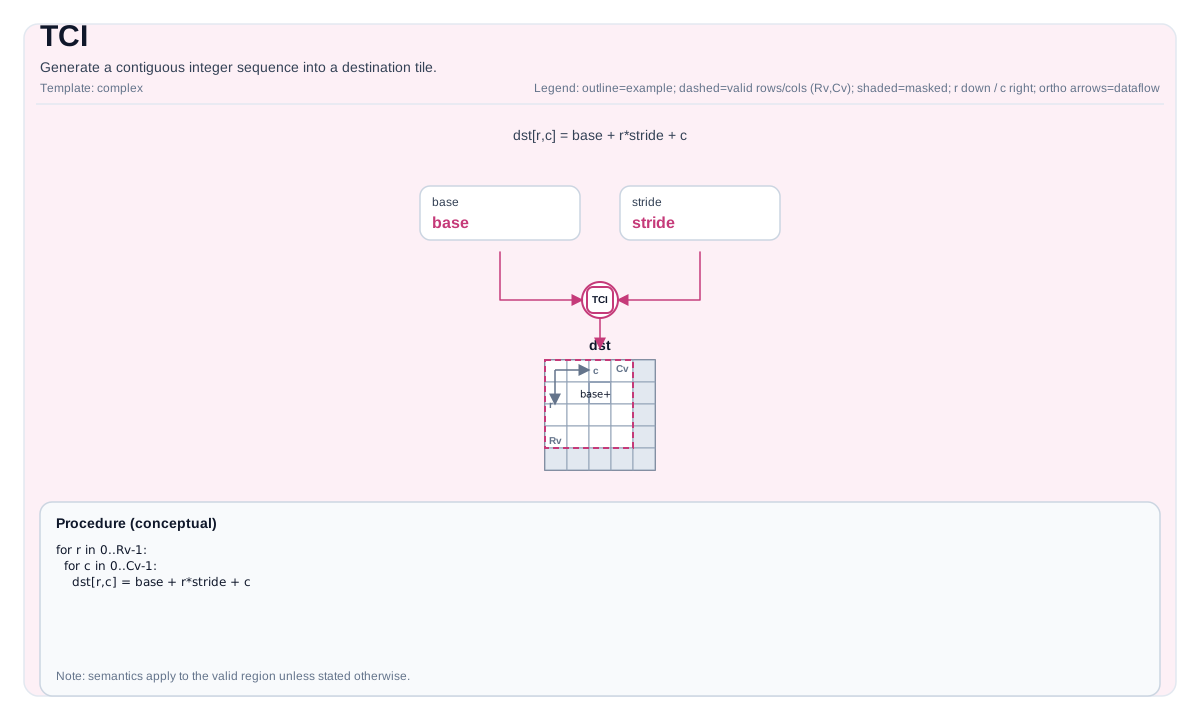
简介
生成连续整数序列到目标Tile中。
数学语义
对于有效元素上的线性化索引 k:
- 升序:
$$ \mathrm{dst}_{k} = S + k $$
- 降序:
$$ \mathrm{dst}_{k} = S - k $$
线性化顺序取决于Tile布局(实现定义)。
汇编语法
同步形式:
%dst = tci %S {descending = false} : !pto.tile<...>
AS Level 1(SSA)
%dst = pto.tci %scalar {descending = false} : dtype -> !pto.tile<...>
AS Level 2(DPS)
pto.tci ins(%scalar {descending = false} : dtype) outs(%dst : !pto.tile_buf<...>)
C++内建接口
声明于 include/pto/common/pto_instr.hpp:
公共包含头为
<pto/pto-inst.hpp>,内部声明位于pto/common/pto_instr.hpp。
template <typename TileData, typename T, int descending, typename... WaitEvents>
PTO_INST RecordEvent TCI(TileData &dst, T start, WaitEvents &... events);

template <typename TileData, typename TileDataTmp, typename T, int descending, typename... WaitEvents>
PTO_INST RecordEvent TCI(TileData &dst, T start, TileDataTmp &tmp, WaitEvents &... events);
约束
- 实现检查 (Atlas A2/A3 训练系列产品/Atlas A2/A3 推理系列产品/Ascend 950PR/Ascend 950DT):
TileData::DType必须与标量模板参数T的类型完全相同。dst/scalar元素类型必须相同;支持类型因架构而异——A2A3:任意 2/4 字节类型(int16_t、uint16_t、int32_t、uint32_t、half、bfloat16_t、float);A5:仅int16_t、uint16_t、int32_t、uint32_t(仅整型,不含浮点)。TileData::Rows == 1(此为实现强制执行的条件,序列沿列方向生成)。
- 有效区域:
- 实现使用
dst.GetValidCol()作为序列长度,不参考dst.GetValidRow()。
- 实现使用
- 临时Tile:
- Atlas A2/A3 训练系列产品/Atlas A2/A3 推理系列产品:C++ API提供带显式
tmpTile的重载,用于向量化实现路径。不带tmp的重载使用标量循环。TileDataTmp::DType必须为4字节类型(float、int32_t或uint32_t)。实现将tmp转换为float *使用;应按字节数来规划tmp Tile大小,而不是按TileDataTmp::DType的类型理解。 - b32元素类型(
int32_t、uint32_t):最小tmp大小 = 768字节(192个float元素)。 向量化路径在tmp内使用两个float子缓冲区:tmp0位于偏移0,tmp1位于偏移 +128 floats。tmp0最多持有64个float元素(256字节)用于初始分数序列,tmp1最多持有64个float元素(256字节)用于累积结果。最高访问的字节偏移为128 × 4 + 64 × 4 = 768字节(192个float元素)。 - b16元素类型(
int16_t、uint16_t):最小tmp大小 = 1792字节(448个float元素)。 向量化路径在tmp内使用四个子缓冲区:tmp0/tmp1(float)位于偏移0和 +128,tmp2/tmp3(half)位于偏移 +256和 +384(以float索引单位计)。tmp0/tmp1各最多持有64个float(256字节)用于分数序列生成。tmp2最多持有16个half元素(32字节)用于float到half的转换。tmp3最多持有128个half元素(256字节)用于最终的half精度累积。最高访问的字节偏移为384 × 4 + 128 × 2 = 1792字节(448个float元素)。 - 一个方便的形状无关分配大小为2048字节(2KiB),例如
Tile<TileType::Vec, float, 1, 512>。 - Ascend 950PR/Ascend 950DT:
tmpTile被接受但不使用。Ascend 950PR/Ascend 950DT硬件直接使用vci向量指令,无需临时缓冲区。
- Atlas A2/A3 训练系列产品/Atlas A2/A3 推理系列产品:C++ API提供带显式
示例
自动(Auto)
#include <pto/pto-inst.hpp>

using namespace pto;

void example_auto() {
  using TileT = Tile<TileType::Vec, int32_t, 1, 16>;
  TileT dst;
  TCI<TileT, int32_t, /*descending=*/0>(dst, /*S=*/0);
}
自动(带tmp)
#include <pto/pto-inst.hpp>

using namespace pto;

void example_auto_tmp() {
  using TileT = Tile<TileType::Vec, int32_t, 1, 16>;
  using TmpT = Tile<TileType::Vec, float, 1, 512>;
  TileT dst;
  TmpT tmp;
  TCI<TileT, TmpT, int32_t, /*descending=*/0>(dst, /*S=*/0, tmp);
}
手动(Manual)
#include <pto/pto-inst.hpp>

using namespace pto;

void example_manual() {
  using TileT = Tile<TileType::Vec, int32_t, 1, 16>;
  TileT dst;
  TASSIGN(dst, 0x1000);
  TCI<TileT, int32_t, /*descending=*/1>(dst, /*S=*/100);
}
手动(带tmp)
#include <pto/pto-inst.hpp>

using namespace pto;

void example_manual_tmp() {
  using TileT = Tile<TileType::Vec, int32_t, 1, 16>;
  using TmpT = Tile<TileType::Vec, float, 1, 512>;
  TileT dst;
  TmpT tmp;
  TASSIGN(dst, 0x1000);
  TASSIGN(tmp, 0x2000);
  TCI<TileT, TmpT, int32_t, /*descending=*/1>(dst, /*S=*/100, tmp);
}
汇编示例(ASM)
自动模式
# 自动模式:由编译器/运行时负责资源放置与调度。
%dst = pto.tci %scalar {descending = false} : dtype -> !pto.tile<...>
手动模式
# 手动模式:先显式绑定资源,再发射指令。
# 可选(当该指令包含 tile 操作数时):
# pto.tassign %arg0, @tile(0x1000)
# pto.tassign %arg1, @tile(0x2000)
%dst = pto.tci %scalar {descending = false} : dtype -> !pto.tile<...>
PTO汇编形式
%dst = tci %S {descending = false} : !pto.tile<...>
# AS Level 2 (DPS)
pto.tci ins(%scalar {descending = false} : dtype) outs(%dst : !pto.tile_buf<...>)